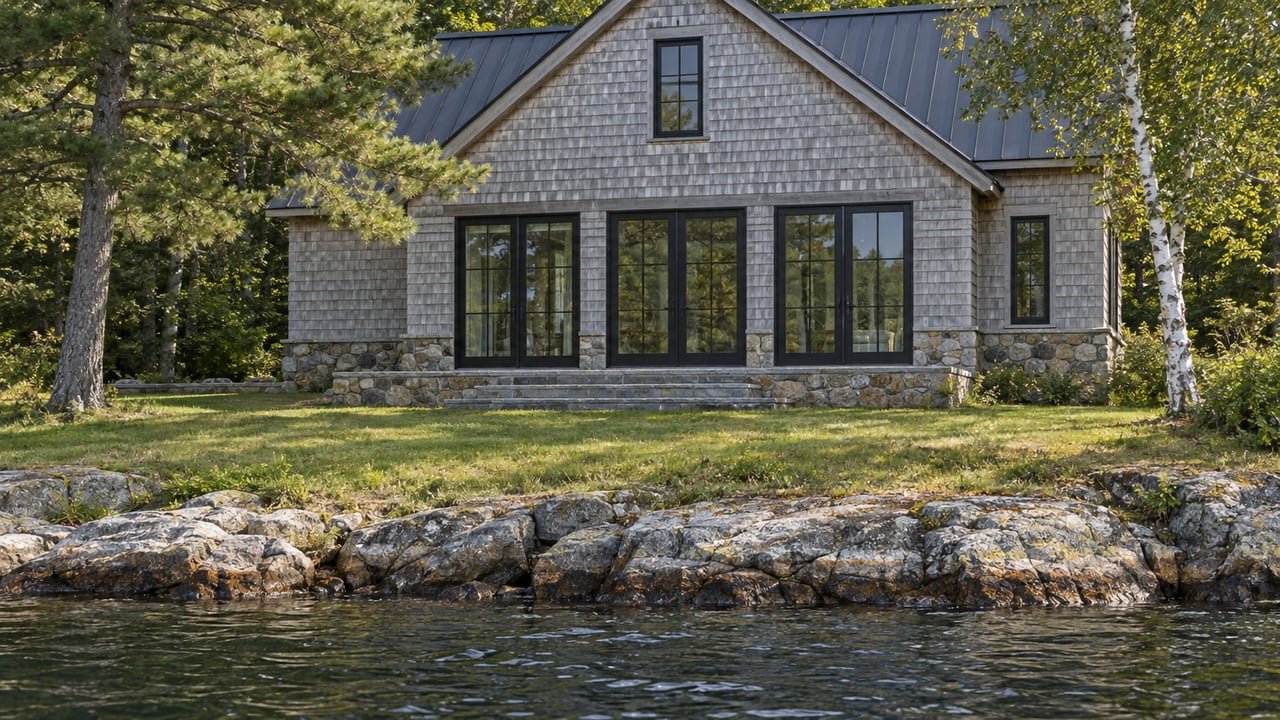
Scroll through waterfront listings on Lake Winnipesaukee's Twenty Mile Bay or Ossipee Lake's Long Sands and the same phrase surfaces again and again: low-tax Tuftonboro, low-tax Freedom, low-tax Wakefield. A buyer weighing Carroll County towns against each other might reasonably wonder whether the phrase describes something measurable or simply sits alongside the photos as part of the standard listing language.
It isn't filler. Tuftonboro's 2025 total property tax rate is $6.40 per $1,000 of assessed value. Freedom's is $7.39. Both towns sit near the bottom of the entire state's list, well below what most New Hampshire homeowners pay. But the reason those two towns keep getting singled out, and not Wolfeboro or Ossipee down the road, has nothing to do with marketing instinct and everything to do with how a town's tax base gets built. Understanding that mechanism matters more than the label itself, because it tells you where the discount is real, where it's fragile, and where it simply doesn't apply.
What the Number Is Actually Measuring
A New Hampshire property tax bill has four layers stacked into one rate: municipal, county, local school, and state education. Tuftonboro's 2025 breakdown adds up like this: $2.22 municipal, $0.72 county, $2.50 local education, and $0.96 state education, for a total of $6.40 per $1,000 of assessed value. Freedom's total lands at $7.39. For comparison, Bartlett came in at $6.02 and Albany at $6.99 in the same 2025 cycle. All four sit near the lower end of the statewide range, which stretched from Charlestown's $36.54 down to towns like Hart's Location, which posted one of the lowest total rates in the state at $2.62.
That spread is the first thing worth sitting with. A tax rate difference of even ten dollars per thousand can mean thousands of dollars a year on a mid-sized home, and the average single-family tax bill in New Hampshire ran $8,174 in 2025. Two Carroll County towns landing near the statewide floor is not a rounding error. It's a structural feature of those specific towns, and it's worth knowing why before assuming it travels to the next town over.
Why It Clusters Where the Water Is
New Hampshire towns fund their budgets by dividing what they need to raise by the total assessed value of everything taxable within their borders. When a town has a large number of high-value waterfront parcels, whether that's a camp on Twenty Mile Bay or an estate near Melvin Village, those properties inflate the total assessed base substantially without adding a proportional number of children to the school system or miles of year-round road to plow. The tax burden gets spread across a bigger denominator, and the rate applied to everyone, waterfront and inland alike, comes down.
This is why the label sticks to Tuftonboro and Freedom specifically rather than to Carroll County as a whole. Both towns carry an outsized share of lakefront value relative to their year-round population. A town with a similar-sized budget but a smaller share of waterfront acreage, or one carrying more year-round infrastructure and school enrollment, won't see the same effect even if it borders the same lake system.
There's a second layer to this that matters for anyone doing the math on a specific parcel. Tuftonboro's own assessing office states that the town's median assessed value currently runs at about 79.6 percent of actual market value. In plain terms, a home that would sell for $500,000 might carry an assessment closer to $400,000, and the $6.40 rate applies to that lower number, not the sale price. That gap between assessed and market value isn't fixed. Tuftonboro's assessing office says state law requires municipalities to update their assessments at least every five years, and a revaluation that catches up to a run of strong sales can move a bill meaningfully even if the posted rate stays flat.
| Town | 2025 Total Tax Rate (per $1,000) |
|---|---|
| Hart's Location | $2.62 |
| Bartlett | $6.02 |
| Tuftonboro | $6.40 |
| Albany | $6.99 |
| Freedom | $7.39 |
The Same Trick Countywide Numbers Play
The low-tax label and the countywide median price are doing the same thing to a buyer's understanding of the market, just from opposite directions. One flattens a town-specific advantage into something that sounds like it applies everywhere. The other flattens very different sub-markets into a single number that sounds precise but hides the mix underneath it.
Carroll County's 2026 price data makes this obvious if you set the year-to-date figure next to the monthly ones sitting underneath it. Through July 2026, local MLS reporting showed 461 single-family homes sold year to date, up 2.4 percent from the same stretch of 2025, with a year-to-date median sale price of $547,450, an 11.7 percent increase over the prior year. Inventory sat at 4.6 months of supply, notably higher than the 2.7 months reported statewide, edging closer to the five to six months generally considered a balanced market.
Look at the individual months alongside that year-to-date median and the picture gets less tidy. Carroll County's median sale price dropped to $497,000 in March 2026, down 5.3 percent year over year, with homes sitting on the market for an average of 89 days. Three months later, in June 2026, the median had climbed to $600,000, up 14.7 percent year over year, and the average days on market had fallen to just 9. Same county, thirteen weeks apart, and the market reads like two different places.
Neither figure is wrong. They're measuring a county that includes Mount Washington Valley towns like Conway and North Conway alongside lake towns like Wolfeboro, Tuftonboro, and Ossipee, plus everything in between. A single large waterfront closing can pull a month's median sharply upward and drop the average days on market in the same stroke, while a stretch weighted more toward inland or entry-level inventory pulls both figures back down just as fast. The county-level number is real, but it reflects a mix of markets that don't behave the same way and don't compete for the same buyer.
What to Check Before You Write an Offer
The practical takeaway isn't to distrust every number, it's to ask which town and which window a given figure actually describes before building a budget around it.
For tax rates, ask for the current tax card on the specific parcel, not a general sense of the town's reputation. Confirm whether the assessment reflects a recent revaluation or one that's a few years old, since New Hampshire's five-year update cycle means a low bill today can shift after the next reassessment catches up to recent sale prices. If waterfront values in a town have climbed since the last revaluation, the gap between assessed and market value that's currently working in an owner's favor could narrow.
For price data, ask which towns and which time period a quoted median actually covers. A number pulled from a full year of Mount Washington Valley and lake-town sales combined tells you less about what a specific Tuftonboro or Ossipee parcel is likely to cost than a narrower, town-specific comparison would. Countywide statistics are useful for spotting direction, not for pricing an individual offer.
A Couple of Questions Worth Asking
Does a low municipal tax rate mean a low tax bill overall? Not automatically. The bill depends on both the rate and the assessed value of the specific property. A high-value waterfront parcel in a low-rate town can still carry a substantial annual bill even though the rate itself looks favorable on paper.
Could Tuftonboro or Freedom's tax rate change significantly? Rates are recalculated annually based on the town's budget and total assessed value, and assessments themselves are required to be updated at least every five years under state law. A revaluation that brings assessed values closer to market value, especially if lakefront sale prices keep climbing, could shift the numbers in either direction even without any change in town spending.
Does this "low-tax" pattern apply to every lake town in Carroll County? No. It shows up where waterfront value makes up an unusually large share of the total tax base relative to a smaller year-round population and service load. Towns with more year-round infrastructure and a different mix of property types won't necessarily see the same effect, even if they border the same lake.
Kim Freeman spends a lot of her time walking buyers through exactly this kind of town-by-town math before an offer goes in, because a listing description can only tell you so much about what a specific parcel will actually cost to hold. If you're comparing towns across Carroll County and want the real numbers behind a specific property, Kimberly Freeman can pull the current tax card and put it next to what you're actually planning to buy.
This article is general information, not legal, tax or financial advice. Consult a qualified professional about your situation.