Wondering why one Belknap County waterfront home draws strong interest at launch while another sits, even when both seem similar on paper? Waterfront pricing is rarely simple, and in the Lakes Region, small differences can create major value gaps. If you want to price your home with confidence, it helps to understand what buyers are really comparing and which local factors carry the most weight. Let’s dive in.
Waterfront pricing is its own market
Belknap County is not just another New Hampshire housing market. A large part of Lake Winnipesaukee, all of Lake Winnisquam, and many smaller lakes cover nearly one-sixth of the county, giving Belknap the largest amount of inland water among New Hampshire counties.
That matters because waterfront and water-access homes behave like a distinct submarket. As of July 5, 2026, Redfin showed 98 waterfront homes in Belknap County with a median listing price of $625,000, while the broader county market had a median sale price of $533,849 and was up 14.8% year over year. Public portal counts can vary by filter and timing, but the bigger point is clear: waterfront homes should not be priced as a simple extension of the general county market.
Start with the right comparable sales
When you price a one-unit residential waterfront home, the sales comparison approach should lead the process. That means looking at similar recent sold properties and adjusting for the features that make your home more or less desirable than those sales.
For Belknap County, the best comps are usually the most similar recent sales on the same lake or within the same access category. A home on one body of water may not compete directly with a home on another, even if the square footage looks close.
Same lake matters
Buyers often compare homes within the same lake first because the waterbody itself is part of the value. Lake-specific conditions, recreational appeal, boating restrictions, bloom history, invasive species information, and even ice-out records can influence how buyers view one property versus another.
That is why pricing should reflect your home’s actual setting, not just its bedroom count or lot size. In waterfront real estate, the lake is often part of the asset.
Access type matters too
Direct frontage and water-access homes should be priced separately. If your property has deeded, shared, association-based, or seasonal access, that detail shapes what the buyer is actually getting and how durable or exclusive that access feels.
A water-access home can still be very appealing, but it should not be treated like direct frontage. Clear documentation of access rights helps support a more accurate list price.
Frontage can change value quickly
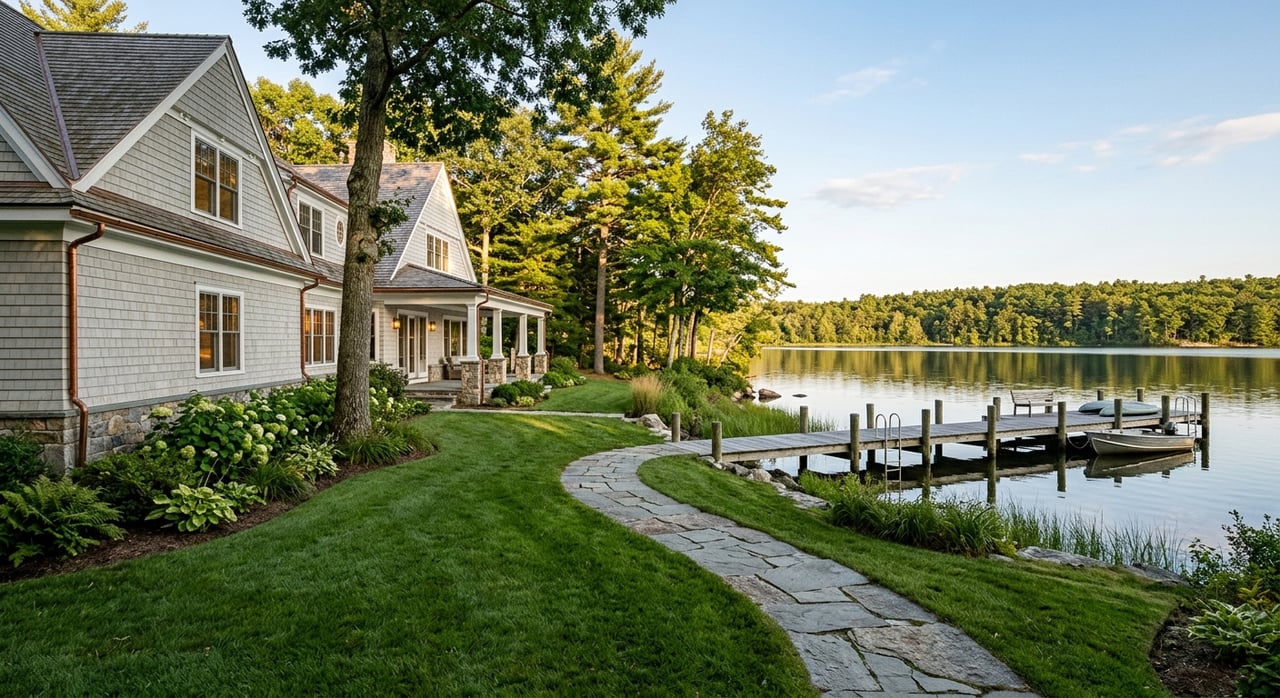
One of the biggest pricing drivers is shoreline frontage. In simple terms, more linear waterfront often means more value, especially when that frontage is usable and supports the way buyers want to enjoy the property.
But frontage is not just about the number on the survey. Lot shape, shoreline configuration, and how much of the site truly supports the waterfront experience all matter.
Usable frontage vs. total frontage
A long stretch of shoreline may sound impressive, but buyers also look at whether that frontage is practical. They may ask:
- Can you easily reach the water?
- Is the shoreline shape functional?
- Does the lot support sitting, swimming, launching, or relaxing near the water?
- Is the view enjoyed from the house as well as the shore?
If the answer is yes across several of those points, your home may deserve a stronger price position than a nearby property with similar square footage but less functional water access.
Views can justify a higher price
A water view is not a small detail. Appraisal research shows that water-view premiums can be meaningful, though the exact premium varies by market.
For your home, that means the quality of the view matters more than simply checking a box that says “water view.” An unobstructed sightline, a wide-open view corridor, or a sunset-facing orientation can support a different price than a home with a filtered or partial view.
What buyers notice about views
Buyers tend to respond most strongly to views they can enjoy daily and easily. That can include:
- A clear line of sight from main living spaces
- Water views from primary bedrooms or decks
- Broad open-water scenes rather than narrow peeks
- Orientation that captures light or sunset exposure
These features are often emotional drivers, and emotional drivers can influence what buyers are willing to pay.
Dock potential is a major pricing factor
Not every waterfront lot offers the same dock value. In New Hampshire, seasonal dock rules can limit what is possible, and having water nearby does not automatically mean a dock has the same utility or feasibility as another property.
NHDES seasonal-dock rules include requirements such as at least 75 feet of shoreline frontage, a 20-foot setback from an abutting property line, and no shoreline modification for certain exempt seasonal docks. So if your lot has limited frontage, shallow water, or awkward shoreline geometry, buyers may see it differently than a comparable parcel with stronger dock potential.
Why dock feasibility matters
For many buyers, a dock is part of the waterfront lifestyle they are paying for. If your property offers better dock feasibility, that can strengthen value. If it has limitations, that does not make the home undesirable, but it should be reflected honestly in the pricing strategy.
Shoreline condition affects buyer confidence
Healthy shoreline conditions do more than look attractive. Shoreline shrubs and trees help protect water from erosion, runoff, pesticides, chemicals, and excess nutrients, and declining water quality often pushes property values down.
In practical terms, buyers may pay closer attention to the condition of the shore than sellers expect. A stable, well-kept shoreline can support value, while visible erosion or bank instability can create concern about future work, costs, and permitting.
Watch for erosion and stabilization issues
If the shoreline is eroding or appears unstable, that can affect price. NHDES guidance says projects on or within banks or surface waters generally require a permit and prefers soft vegetative stabilization first.
That means a shoreline problem is not always a quick cosmetic fix. Before listing, it can be smart to understand whether there are conditions that may lower buyer confidence or change the negotiation.
Septic status can shape negotiations
For waterfront sellers, septic is now a bigger pricing conversation than it used to be. Effective September 1, 2024, transfers of waterfront property with septic systems in protected shoreland require a professional septic system evaluation by a state-licensed evaluator, with limited exceptions.
If your system is older, undersized, or showing signs of failure, buyers may factor that risk into their offers. Even if the home shows beautifully, septic concerns can put pressure on price or create delays later.
Price with the septic picture in mind
If a septic evaluation has already been completed, that information can help support your pricing and reduce uncertainty. If it has not, it may still be worth discussing before going live, especially for a waterfront home where due diligence tends to be more detailed.
Shoreland rules can influence value
The Shoreland Water Quality Protection Act covers lands within 250 feet of the reference line of protected waters, including lakes and ponds greater than 10 acres. For buyers, this affects more than the home’s current condition.
It also affects what may legally be altered, added, or cleared in the future. If a buyer sees limits on expansion, vegetation removal, or shoreline changes, that can affect how much flexibility they believe the property offers and what they are willing to pay.
A practical way to price your home
If you are preparing to sell, think of pricing as a step-by-step review of both market evidence and property-specific details. A polished waterfront strategy usually includes:
- Recent sold comps on the same lake when possible
- Separation between direct frontage and water-access comps
- Adjustments for shoreline frontage and lot shape
- Adjustments for view quality and orientation
- Review of dock feasibility and shoreline geometry
- Review of shoreline condition and erosion concerns
- Consideration of septic status and evaluation results
- Review of shoreland compliance and future use limits
This is where local experience matters. Waterfront buyers tend to notice details quickly, and the strongest pricing plans account for both the obvious features and the less visible issues that can affect value.
Questions to ask before you list
Before choosing a final list price, it helps to ask a few practical questions:
- Which recent sales are truly comparable for this lake and this type of waterfront?
- How much of the value comes from direct frontage, view, or access rights?
- Does the lot support realistic dock potential?
- Is the shoreline stable, or are there erosion concerns?
- Has a septic evaluation been completed if one is required?
- Are there shoreland restrictions that could affect future changes?
- What lake-specific reports should be reviewed before setting the price?
These are the kinds of details that can keep you from pricing too aggressively or leaving value on the table.
If you are selling a waterfront property in Belknap County, a careful pricing strategy can make a meaningful difference in both buyer response and negotiation strength. For thoughtful local guidance grounded in the Lakes Region market, reach out to Kimberly Freeman.
FAQs
How is a Belknap County waterfront home priced differently from a regular home?
- A Belknap County waterfront home is usually priced within its own submarket using recent comparable sales on the same lake or in the same access category, then adjusted for frontage, views, dock potential, shoreline condition, septic status, and shoreland rules.
What features add the most value to a Belknap County waterfront home?
- The most important value drivers often include usable shoreline frontage, water access, view quality, dock feasibility, shoreline condition, and the specific lake or pond the property sits on.
Does dock potential affect the price of a Belknap County waterfront property?
- Yes. Dock potential can affect value because NHDES seasonal-dock rules include frontage, setback, and shoreline conditions that may limit what is possible on a given lot.
Does septic condition matter when pricing a waterfront home in New Hampshire?
- Yes. Since September 1, 2024, certain waterfront property transfers with septic systems in protected shoreland require a professional septic evaluation, so an aging or failing system can influence price and negotiations.
Should water-access homes in Belknap County be priced like direct waterfront homes?
- No. Water-access homes should be priced separately from direct frontage homes because the type, exclusivity, and durability of the water access are part of the value buyers are purchasing.
Why do lake-specific conditions matter when pricing a Belknap County home?
- Lake-specific conditions matter because buyers may compare bloom history, invasive species information, boating restrictions, and overall water condition when deciding what a property is worth.