If you put an offer on a camp along Ossipee Lake or a cottage tucked into a cove on Lake Winnipesaukee this fall, who do you think is responsible for proving the septic system actually works before you close? Most buyers assume the answer is the seller, because sellers used to have to complete a Waterfront Site Assessment. That assessment did not establish whether the system was functioning. As of September 1, 2024, the old assessment requirement gave way to a new process.
New Hampshire rewrote the rule that governs septic evaluations on waterfront property sales, and the change lands squarely on Carroll County, where towns like Tuftonboro, Moultonborough, Wolfeboro, Ossipee, and Conway carry some of the state's densest concentrations of camps and cottages sitting within a few hundred feet of a lake. The law is RSA 485-A:39, passed as House Bill 1113 and signed by Governor Chris Sununu. It shifted the obligation for septic evaluations on developed waterfront property from the seller to the buyer. That single change rearranges the timeline, the paperwork, and in some cases the negotiating leverage on nearly every lakefront deal in the county.
What the Rule Used to Be
Before September 2024, a seller of developed waterfront property had to complete something called a Waterfront Site Assessment before listing. It told a buyer the lot's septic loading capacity and the approval status of the existing system, essentially confirming how many bedrooms the septic could legally support. What it did not do was assess whether the system was actually functioning. A buyer could receive a clean assessment on a system that was, in practice, failing.
New Hampshire's Department of Environmental Services eliminated that requirement and replaced it with something more rigorous, and pointed the obligation at the other party.
What the Rule Is Now
Under RSA 485-A:39, any developed waterfront property with a septic system located within 250 feet of the reference line, the boundary NHDES uses to measure from a lake, pond, or qualifying river, now requires a septic system evaluation before the property can transfer. The buyer is responsible for arranging it, and it has to be done by a state-licensed septic system evaluator, listed through the NH Office of Professional Licensure and Certification.
There's a second layer. If the existing system was never approved by NHDES, or if it was approved before September 1989, the evaluation alone isn't enough. The buyer also has to bring in a state-permitted septic system designer, who digs test pits alongside the existing leach field and excavates into it to determine the seasonal high water table and the condition of the system's bed bottom. That's a meaningfully more invasive process than a standard evaluation, and it takes longer to schedule.
Here's how the two paths differ:
| System status | What's required | Who arranges it |
|---|---|---|
| Approved after September 1989, in good standing | Evaluation by a licensed septic system evaluator | Buyer |
| Approved before September 1989, or never state-approved | Evaluation plus a full assessment by a permitted septic system designer, including test pits | Buyer |
| Seller already has a recent evaluation | Buyer may accept it if completed within 180 days of the transfer date | Either party, by agreement |
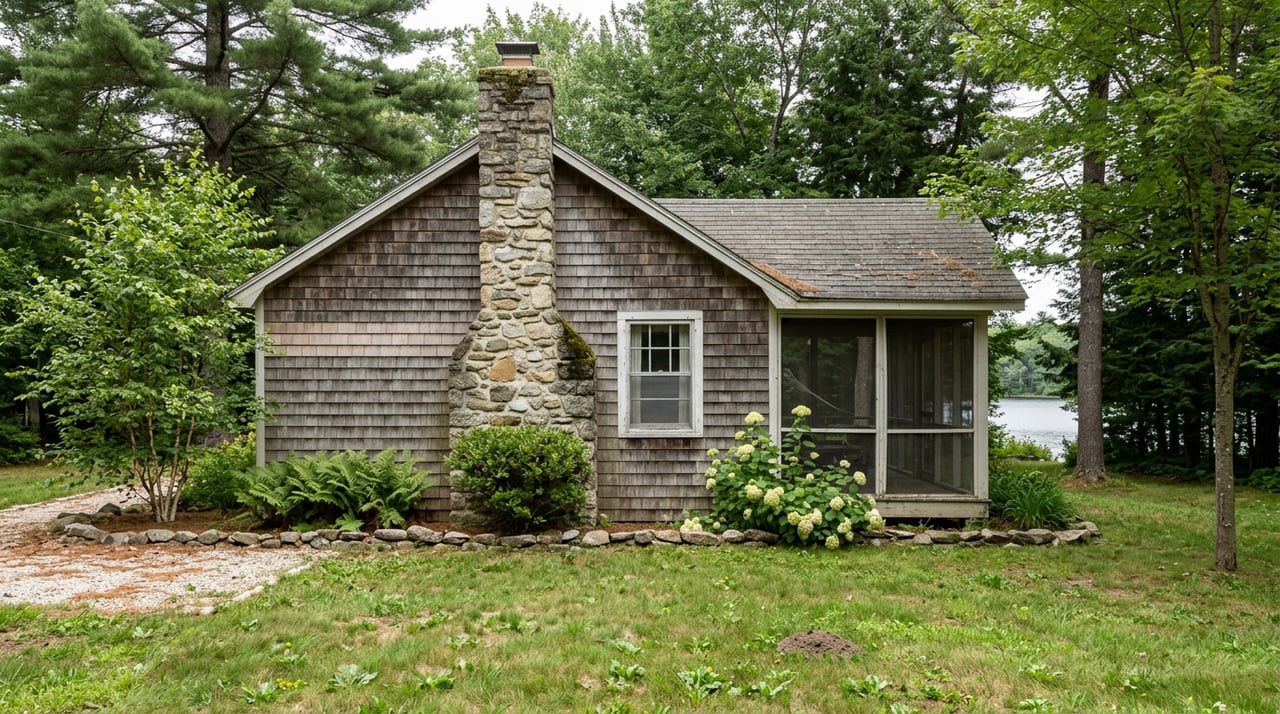
That second row matters more in Carroll County than almost anywhere else in the Lakes Region. NHDES has reliable septic records only back to 1971 for inland lots and 1967 for waterfront lots, and a meaningful share of the older camp stock on Ossipee Lake, Conway Lake, and the smaller ponds around Effingham and Freedom predates both dates. Charm and vintage cut both ways here. The same 1960s camp with the original stone fireplace and the hand-built dock is more likely to trigger the designer-level review, not just the evaluator visit.
Why the Timeline Is the Real Risk
The mechanics of the law are straightforward. The scheduling reality is where buyers get caught off guard.
Licensed septic evaluators and permitted designers are a finite pool working across the entire Lakes Region during the same compressed window most buyers want to close: late spring through early fall, when ground isn't frozen and camps are easiest to show. Carroll County's lake market moves on a seasonal clock, and so does the small number of professionals qualified to do this work. A buyer who writes an offer with a standard two-week due diligence period and doesn't confirm evaluator availability first can find themselves asking for an extension before they've even gotten an inspector on site.
Because much of Carroll County sits on thin soil over ledge, engineered mound systems are common here, elevated sand-fill designs built on top of the natural grade rather than dug into it. They're a reasonable solution to difficult ground, but they add complexity to any evaluation that also requires excavation, which is exactly the scenario a pre-1989 or unapproved system forces. Build extra time into the calendar if the listing you're looking at is an older camp on a smaller, less-developed pond rather than a newer build on the main body of Winnipesaukee.
If the System Fails
If the evaluation turns up a failing system, the sale isn't automatically off. The law gives the parties 180 days after the transfer to repair or replace it, and it leaves the cost allocation open to negotiation between buyer and seller. That's a meaningful shift from the old regime, where a failing system discovered late in the process could blow up a deal entirely because the seller was the one on the hook for the pre-listing assessment.
In practice, this means the septic evaluation result is now a negotiating input, not a closing obstacle. A buyer who gets a failing report in hand before the purchase and sale agreement is signed has real leverage to ask for a price adjustment or a seller credit toward the replacement. A buyer who waits until the week before closing to schedule the evaluation has much less room to negotiate anything, because by then the deal has too much momentum behind it for either side to walk.
What This Looks Like on the Ground in Carroll County
Ossipee Lake had fifteen waterfront homes on the market as of late July 2026, with a median listing price around $590,000, a mix of turnkey year-round homes and smaller seasonal cottages. Silver Lake, Conway Lake, Duncan Lake, and Balch Lake round out a county where waterfront inventory skews toward exactly the kind of older, character-driven camp stock most likely to fall under the designer-review trigger. None of that is a reason to avoid these properties. It's a reason to build the septic evaluation into your offer strategy from the start rather than treating it as paperwork to handle after you're already under contract.
If you're comparing two similar camps, one built in the 1970s and one built in 2015, factor the evaluation pathway into your timeline expectations for each, not just the price. The newer property will likely clear a standard evaluation quickly. The older one may need weeks of additional lead time for a designer to get on site, dig test pits, and write up findings, particularly during the busiest months on the lake calendar.
A Few Questions Worth Asking Before You Write an Offer
Can I just use the seller's existing septic inspection? Only if it was completed by a licensed evaluator within 180 days of your closing date. Ask for the paperwork and the date up front.
Does this apply to a home on a smaller pond, not just Winnipesaukee? Yes. The 250-foot rule applies to any water body on NHDES's list of protected waters, which includes most of the county's named lakes and ponds, not just the big ones.
What if I already plan to replace the septic system regardless? You may be able to skip the evaluation step if you're installing a new system as part of the purchase, since the new design will require its own permitting process. Confirm this with your evaluator or designer before assuming it applies to your situation.
Carroll County's lake inventory rewards buyers who do their homework early, and this is one of the places where a week of advance planning saves a month of frustration later. If you're weighing a camp on Ossipee, a cottage on Conway Lake, or a place on Winnipesaukee itself, Kim Freeman can walk you through what a specific property's septic history means for your timeline before you write the offer, not after.
This article is general information, not legal, tax or financial advice. Consult a qualified professional about your situation.